Hard centres and dry rice are not the same observation. Look at the grains, the remaining liquid and the base before deciding that the pot simply needs a longer time on high heat.
Check hard rice in a plov pot
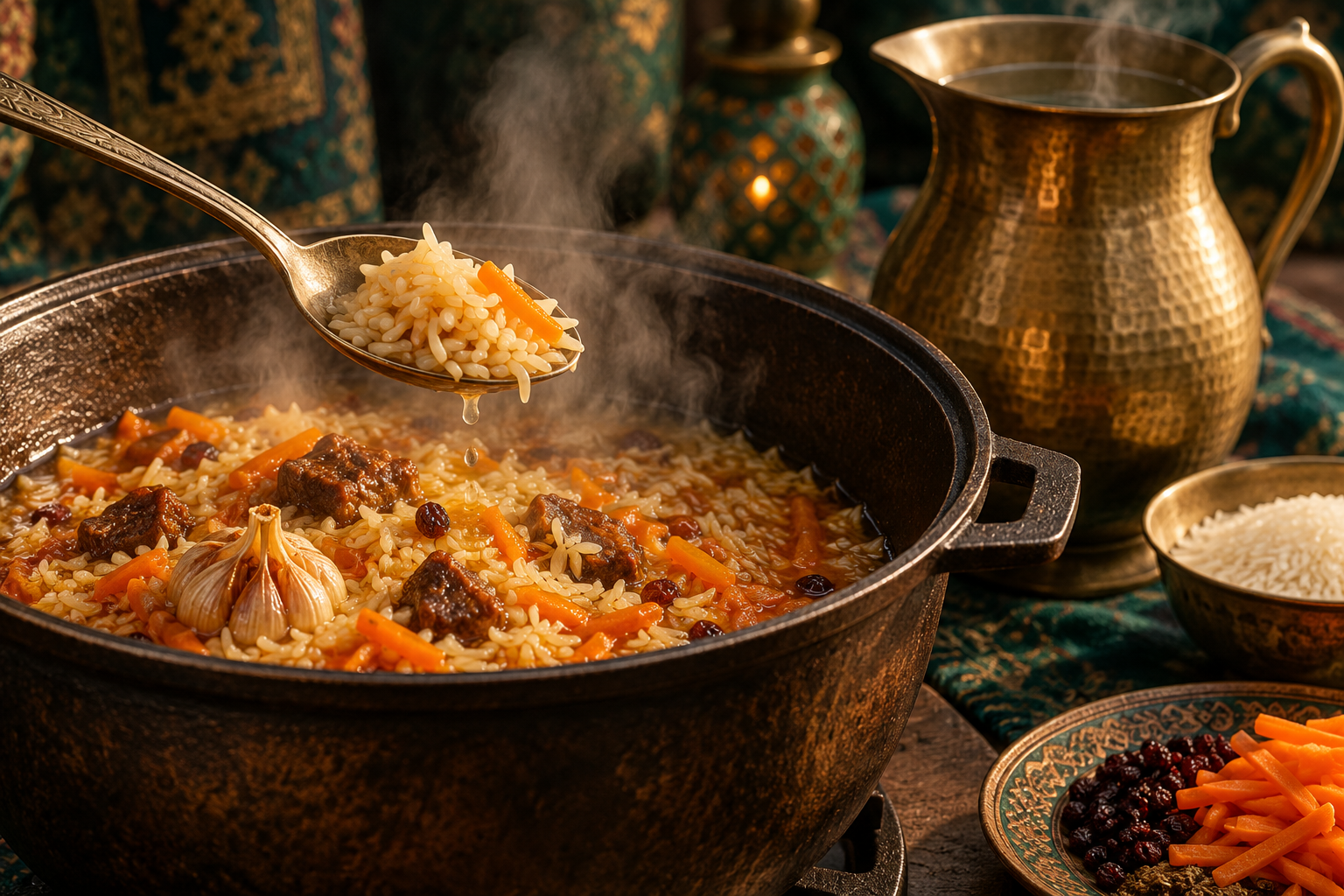
Take a small spoonful from a suitable place and assess it when it is cool enough to taste safely. Is the entire grain firm, or is the outside soft with a resistant centre? Is the pot visibly dry or is there liquid waiting to be absorbed?
Return to the preparation instructions. A change of grain, an omitted soak or an early move to low heat can all change the context. Do not add several new ingredients while trying to understand it.
Use the recipe’s finishing guidance
USA Rice’s plain-rice guidance describes adding liquid and continuing covered cooking for hard rice. In a mixed plov, the rest of the dish also matters. Use small, controlled adjustments consistent with your recipe instead of flooding the pot.
If meat, vegetables or the bottom of the pot are already overcooking, acknowledge that a perfect rescue may not be possible. Check safety and doneness independently from the texture you want.
Prevent a repeat
Record when the rice went in, when the dish was covered and when it was served. Check the lid fit and measure liquid accurately on the next attempt. A written sequence makes it easier to see whether the issue came from preparation or the final stage.
Continue reading: Best rice for plov: choose by method, not a single label.
Frequently asked questions
Does high heat always fix hard rice?
No. It can worsen a dry or catching base; check moisture and the selected method.
Should I use a large unmeasured splash of water?
Use a controlled adjustment and observe the whole dish.
Why is my plov rice still hard?
Check whether the pot is dry, contains unabsorbed liquid or has grains with only a firm centre. Review the rice preparation and timing. Those observations help you select a controlled correction rather than defaulting to more high heat.
How can I finish undercooked pilaf rice?
Use finishing guidance compatible with the selected recipe and condition of the whole dish. Small controlled adjustments may help, but meat, vegetables and the base also matter. Do not promise a perfect rescue when other ingredients are already overcooked.
Should I add water when plov rice is crunchy?
Assess moisture first and use a measured adjustment consistent with the method. Adding a large quantity blindly can exchange one problem for another. Keep the rest of the mixed dish in view while addressing the grain.
Why can rice stay hard even when the meat is ready?
The ingredients have different cooking requirements. Check the grain preparation, liquid stage and lid or heat sequence. Meat readiness cannot be used as the single test for the whole pot.
Sources & editorial notes
Original Tales & Table editorial guidance. Linked sources support the cultural, rice or safety points identified in the text. Recipe ideas are original kitchen drafts and have not been tested by our kitchen.