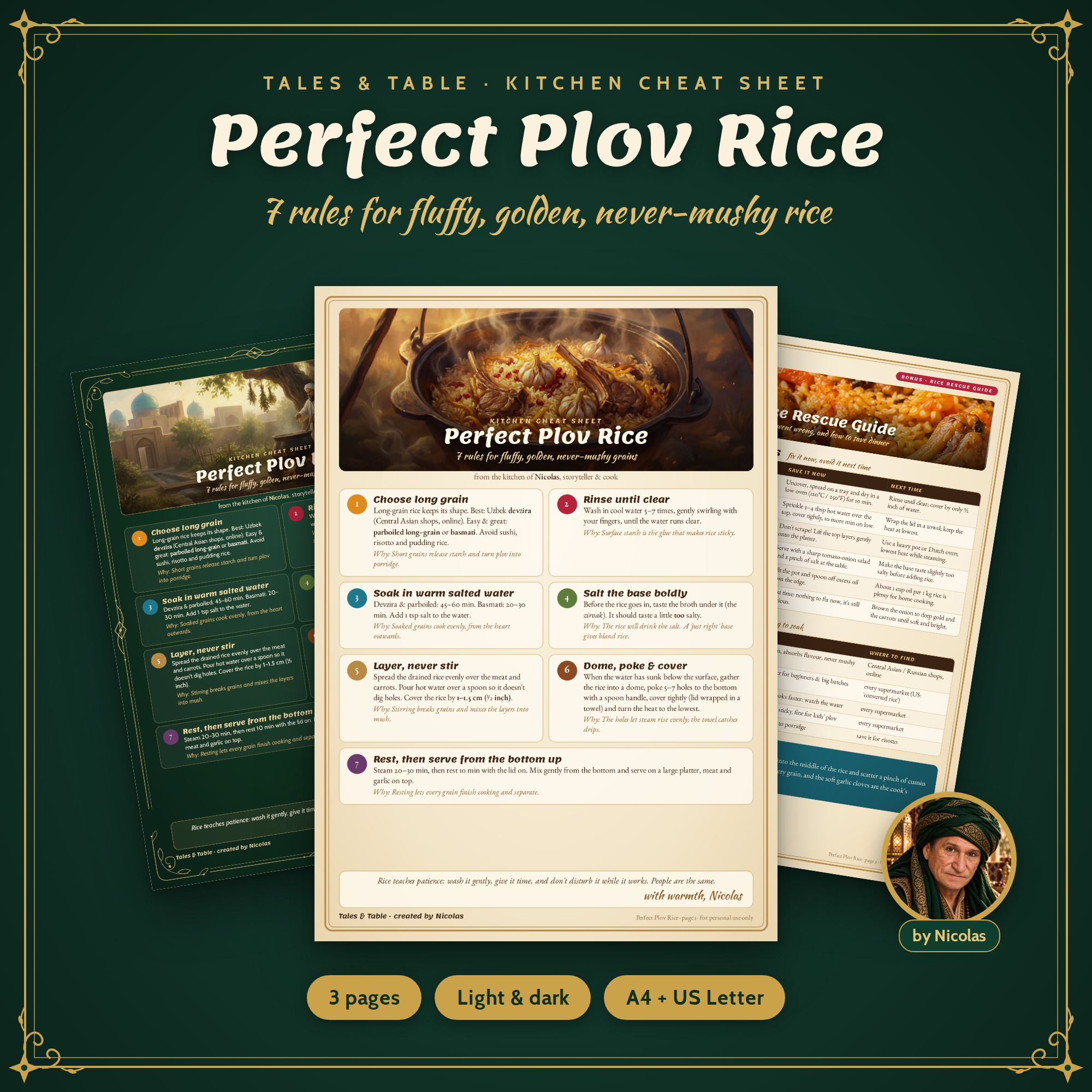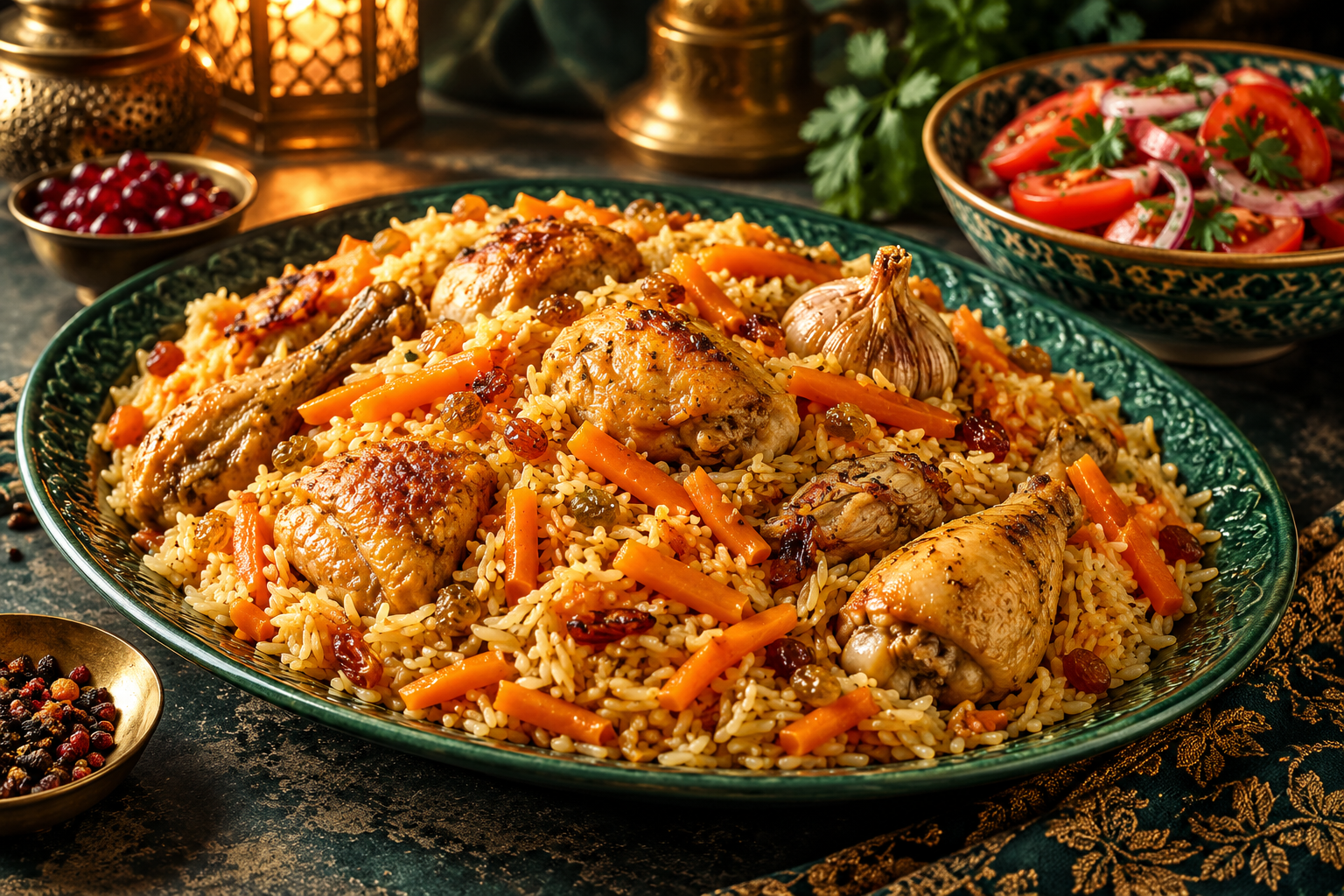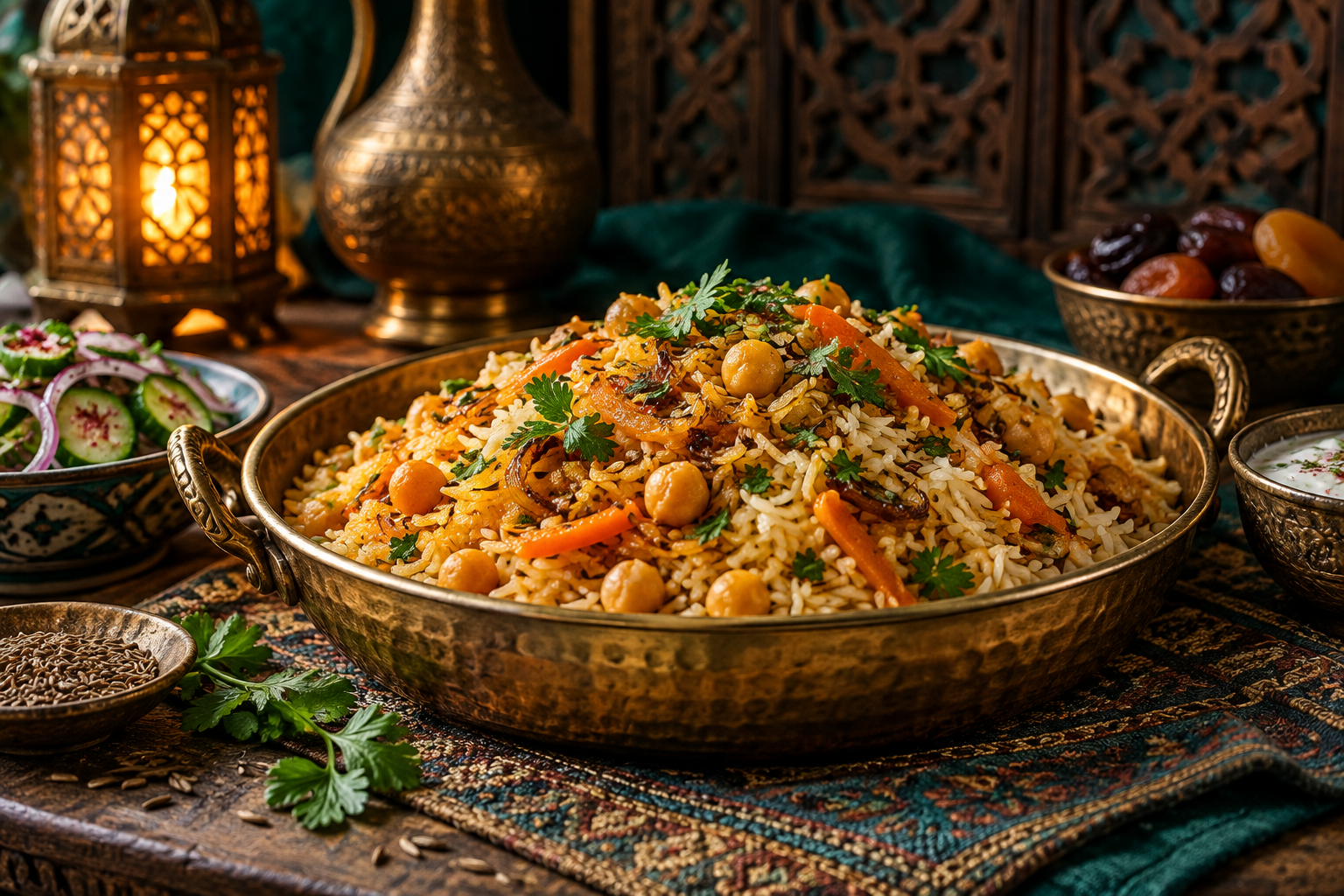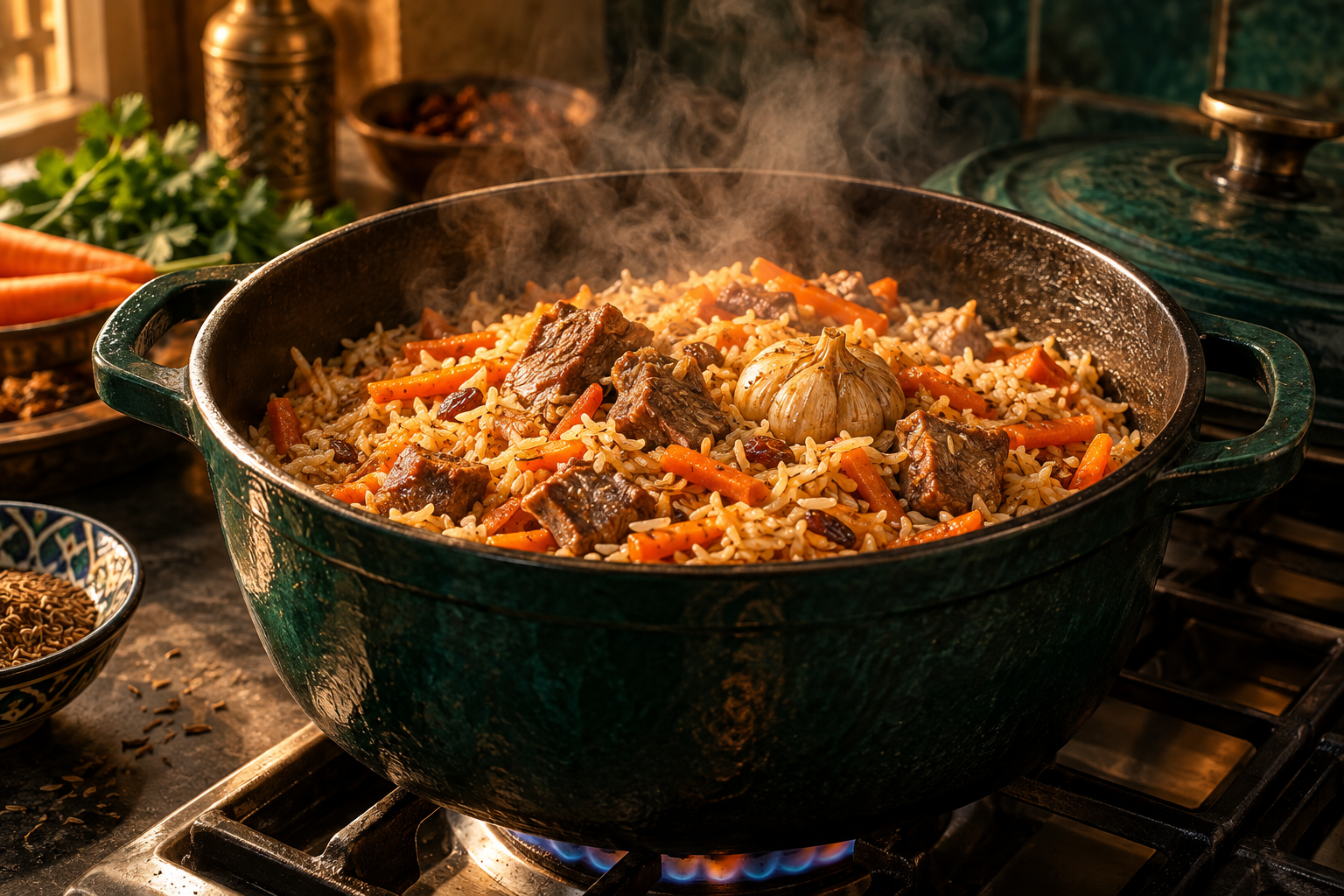
A kazan is not the only vessel found in a home kitchen. A wide, heavy stockpot can support a small stovetop adaptation when the recipe accounts for its shape, heat retention and lid.
Choose a stockpot for stovetop plov
Use a heavy pot with a close-fitting lid and enough room for the ingredients without crowding. A narrow, tall stockpot behaves differently from a wide kazan, so keep the first batch modest and avoid scaling an unfamiliar recipe.
Cook the base, then add the rice
Brown the meat, cook the onions and carrots, and season the base according to the chosen recipe. Add rinsed, drained rice in an even layer and pour in the measured liquid without stirring the layers together unless your method says otherwise. Bring the pot to a controlled simmer before covering.
Use low heat and check the finish
Reduce heat for the covered stage and follow the recipe’s timing for your grain and pot. Let the rice rest before fluffing. If the centre remains firm, use a small amount of hot water and a short covered finish instead of flooding the pot. Review the zirvak basics before your next batch.
Frequently asked questions
Can I cook plov without a kazan?
Yes. A heavy lidded pot can work for a small home adaptation, though the result may differ.
Should I stir the rice into the base?
Follow the specific recipe; many layered methods keep rice on top during the covered stage.
Why is a wide pot useful?
It gives the ingredients room and can heat more evenly than a narrow, tall vessel.
Can I make plov in a stockpot?
Yes. A heavy pot with a close-fitting lid can work for a modest stovetop adaptation, though its shape differs from a kazan.
Should the rice be stirred into the plov base?
Follow the named method. Many layered recipes keep rice above the seasoned base while it steams.
What kind of pot works best for stovetop plov?
A heavy, lidded pot with enough width and capacity for the batch is a useful home option.
How do I fix firm rice in plov?
Follow the recipe’s check point and add only a small amount of hot water if needed, then finish covered briefly.
Sources & editorial notes
Original Tales & Table editorial guidance. Linked sources support the cultural, rice or safety points identified in the text. Recipe ideas are original kitchen drafts and have not been tested by our kitchen.