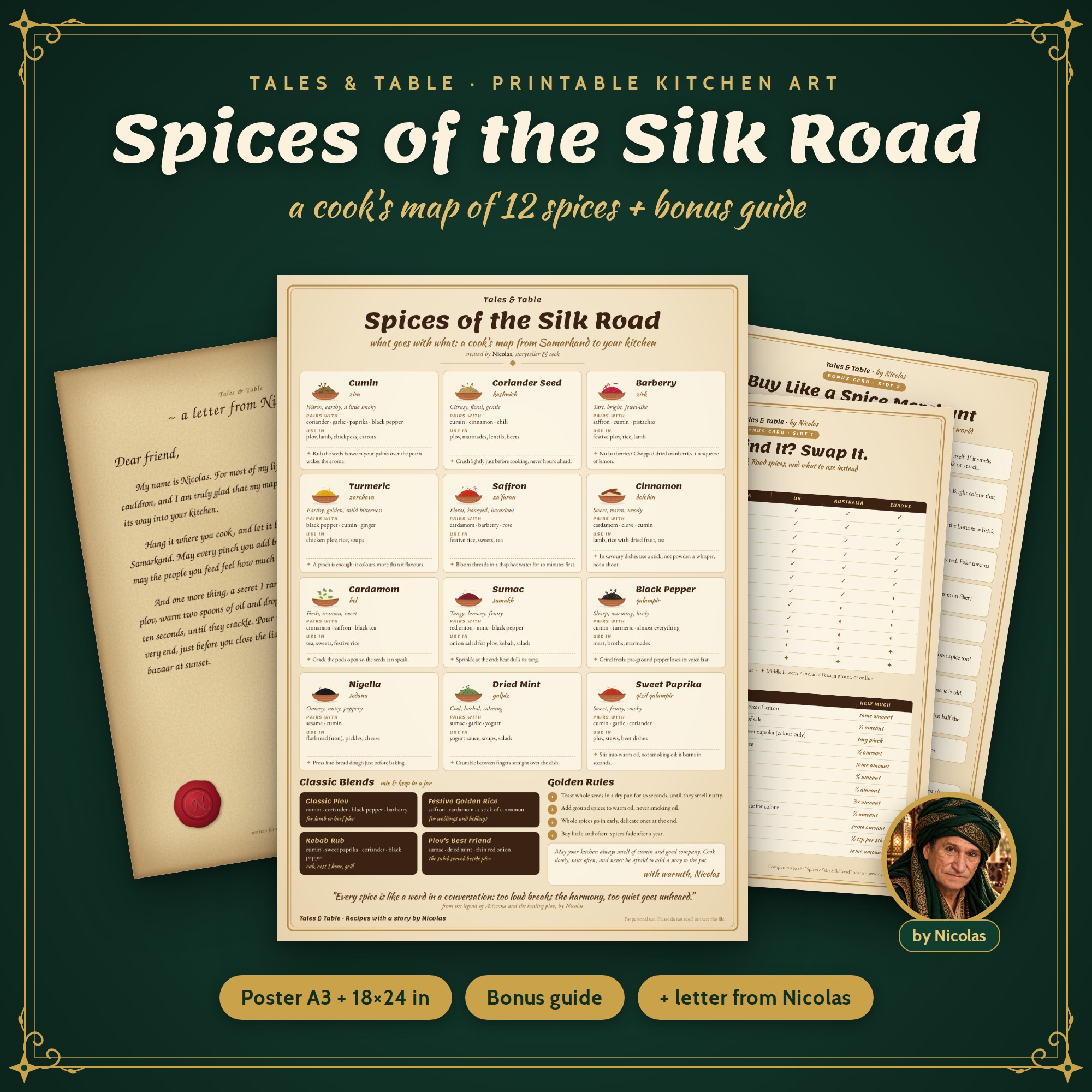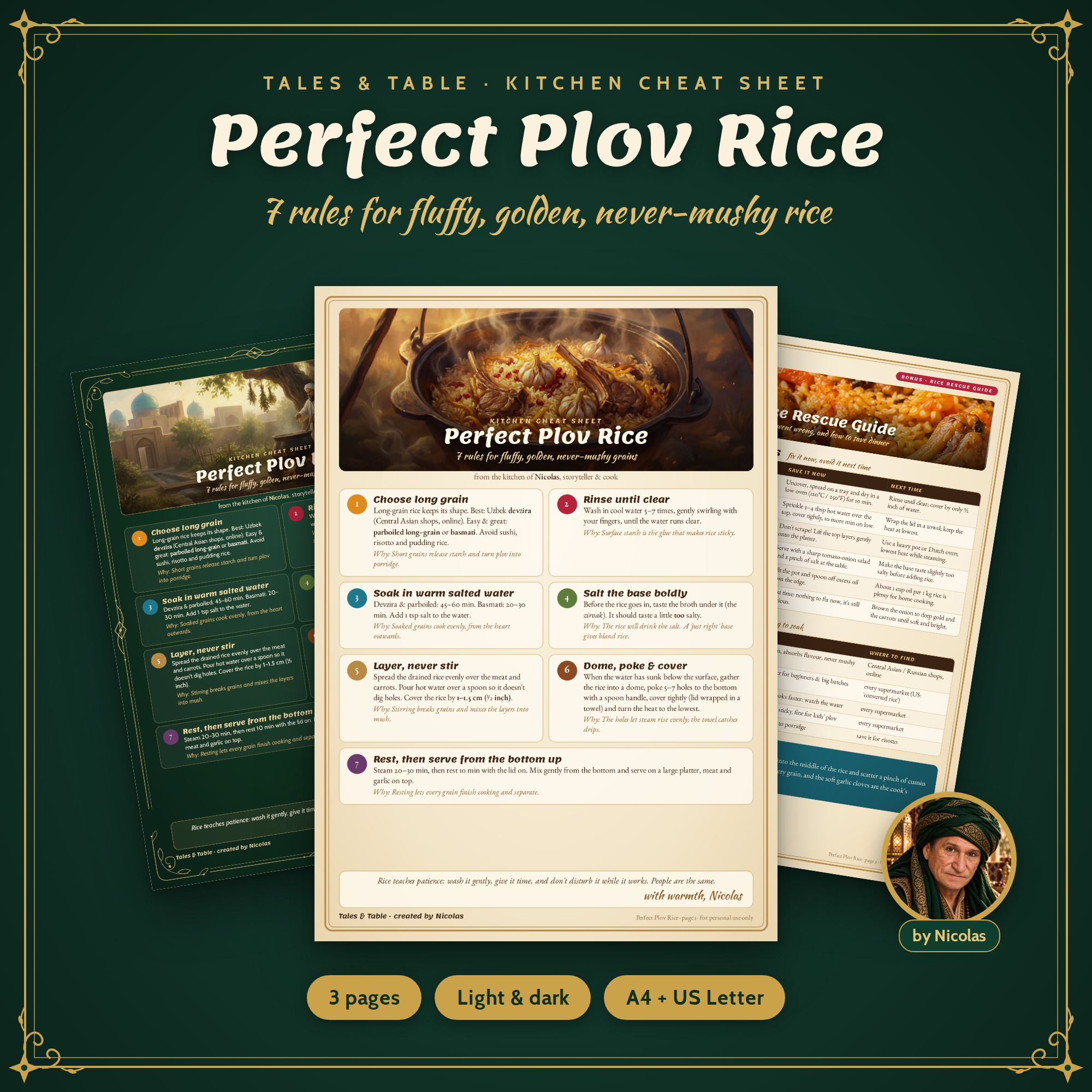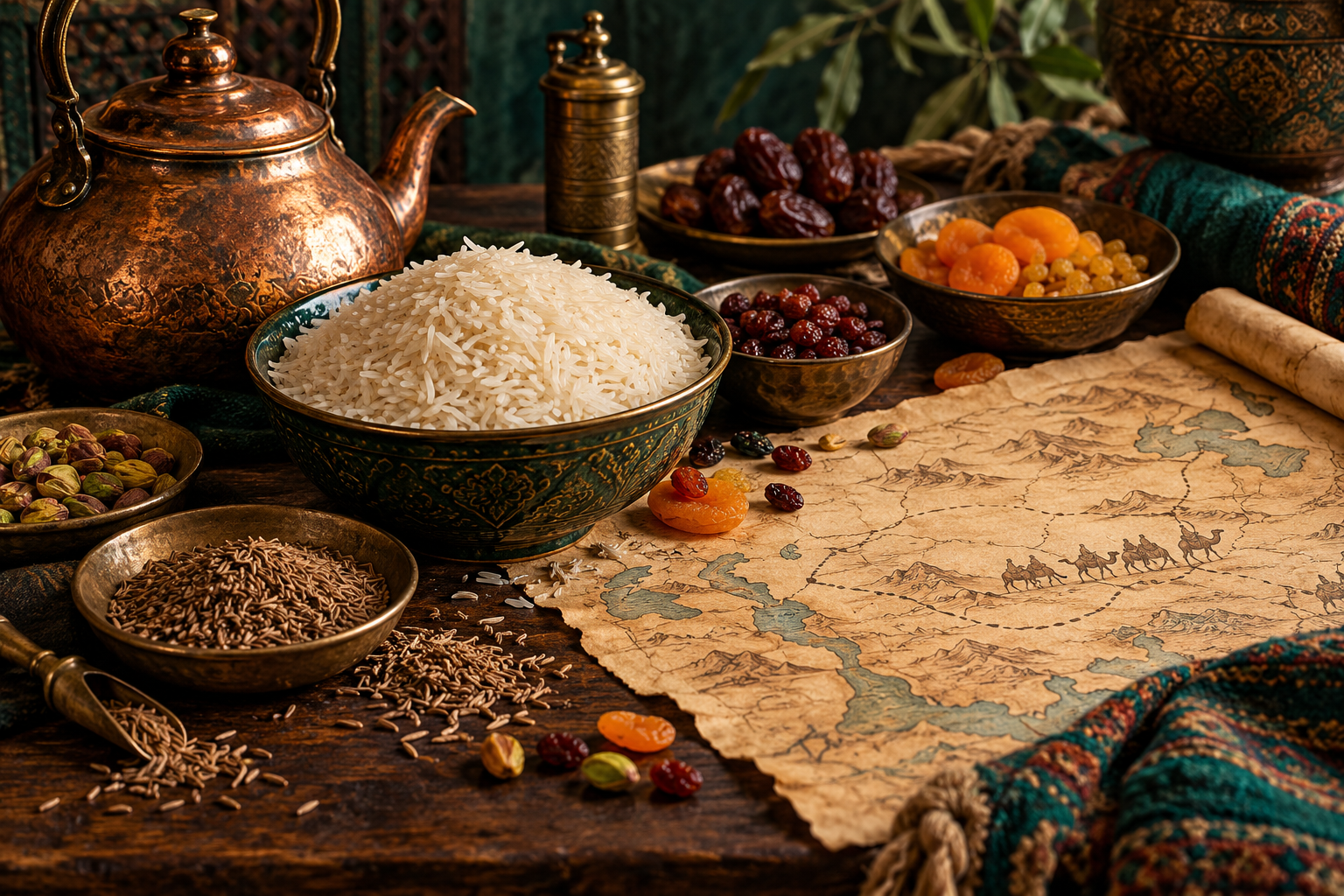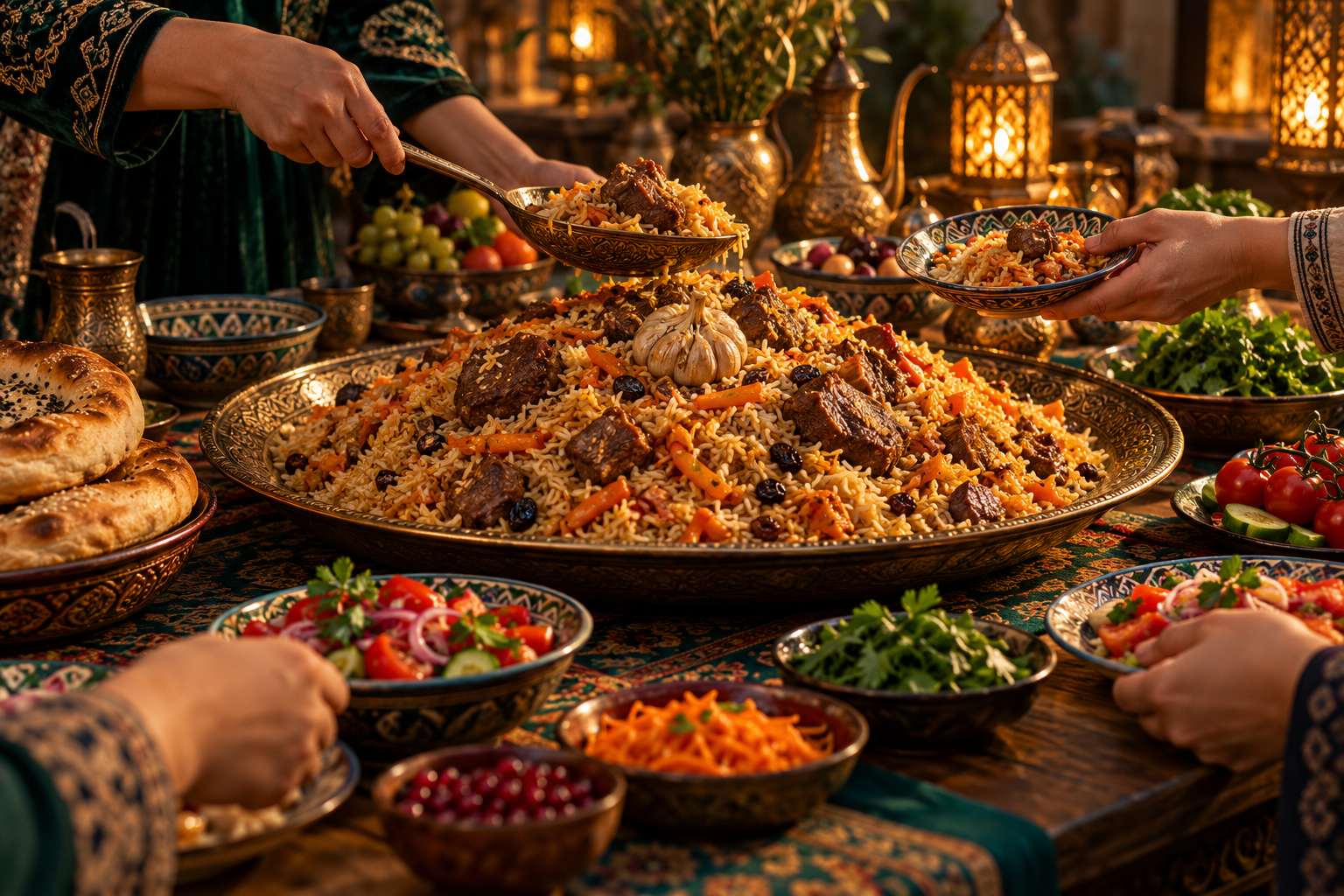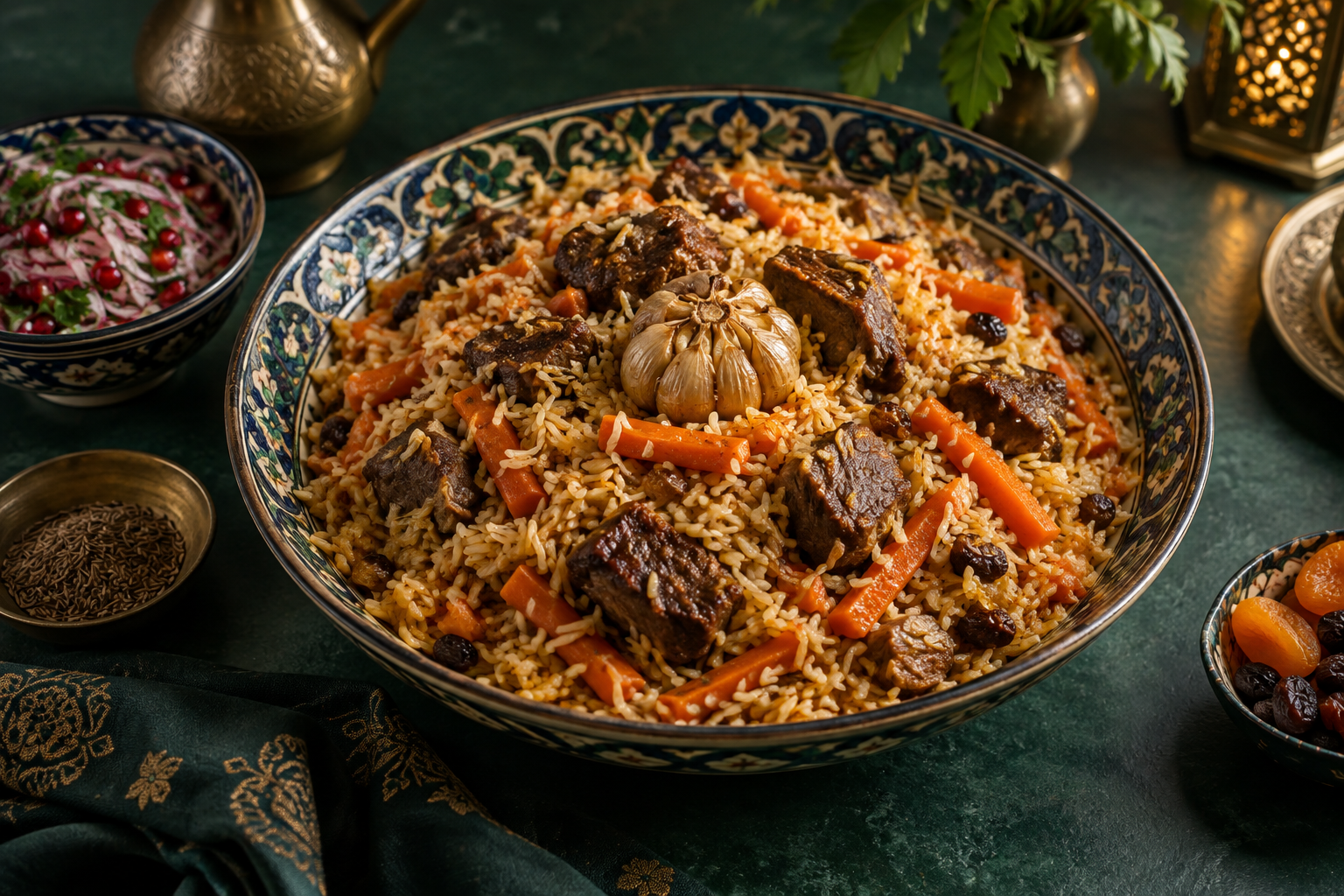
Plov is an invitation to look at both a rice dish and the people who cook it. The familiar combination of rice, carrots, onions and meat is a starting point, rather than a rule that every family must follow.
What makes plov a shared rice dish?
UNESCO’s Uzbek palov entry describes a food prepared for ordinary meals as well as important gatherings. It connects cooking with hospitality and learning across generations. That recognition concerns a living practice, not a compulsory national recipe.
In the kitchen, think of plov as a relationship between tender ingredients and properly cooked rice. The cook must manage the seasoned base, the moisture and the final steaming stage. A beautiful garnish cannot repair rice that has absorbed far too much water.
Read the recipe before naming the style
Check whether the meat and rice cook together, whether the rice is drained first and whether accompaniments are served separately. Those choices tell you more than a broad label such as Eastern rice. Ask whose recipe it is and which place or household it represents.
For a first attempt, choose one manageable recipe and keep its ingredients intact. Make notes about your rice brand, pot and finished texture. Once you understand that result, change one thing at a time.
Build a balanced table
Serve a small portion first and let guests ask for more. A crisp vegetable side, drinking water and time to sit down make the meal welcoming. Explain unfamiliar ingredients without presenting your adaptation as the only authentic version. Explore Uzbek plov next.
Frequently asked questions
Is plov always made with lamb?
No. Recipes may use other meats or omit meat; identify the specific recipe you are following.
Is every pilaf the same as Uzbek plov?
No. The terms cover different local dishes and methods.
What is plov made of?
A familiar starting combination is rice, carrots, onions and meat, but a specific recipe may differ. Read the complete ingredient list rather than treating the dish name as a fixed shopping list. Keep the source and any substitutions in your cooking notes.
What is the difference between plov and pilaf?
Compare named recipes and their methods. Related terminology does not make the same liquid quantity, grain preparation or cooking sequence suitable for every dish. The regional or household recipe is the useful unit of comparison.
Can I make plov without meat?
Yes, you can create a meat-free variation. Use a complete vegetable or chickpea method with appropriate stock and accompaniments rather than simply removing meat from instructions that depend on a meat base.
What should I serve with plov?
A simple fresh vegetable side offers a contrast to the rice. Plan the full meal and guests’ dietary requirements, then choose accompaniments that suit the named recipe. Start with manageable portions and offer seconds.
Sources & editorial notes
Original Tales & Table editorial guidance. Linked sources support the cultural, rice or safety points identified in the text. Recipe ideas are original kitchen drafts and have not been tested by our kitchen.