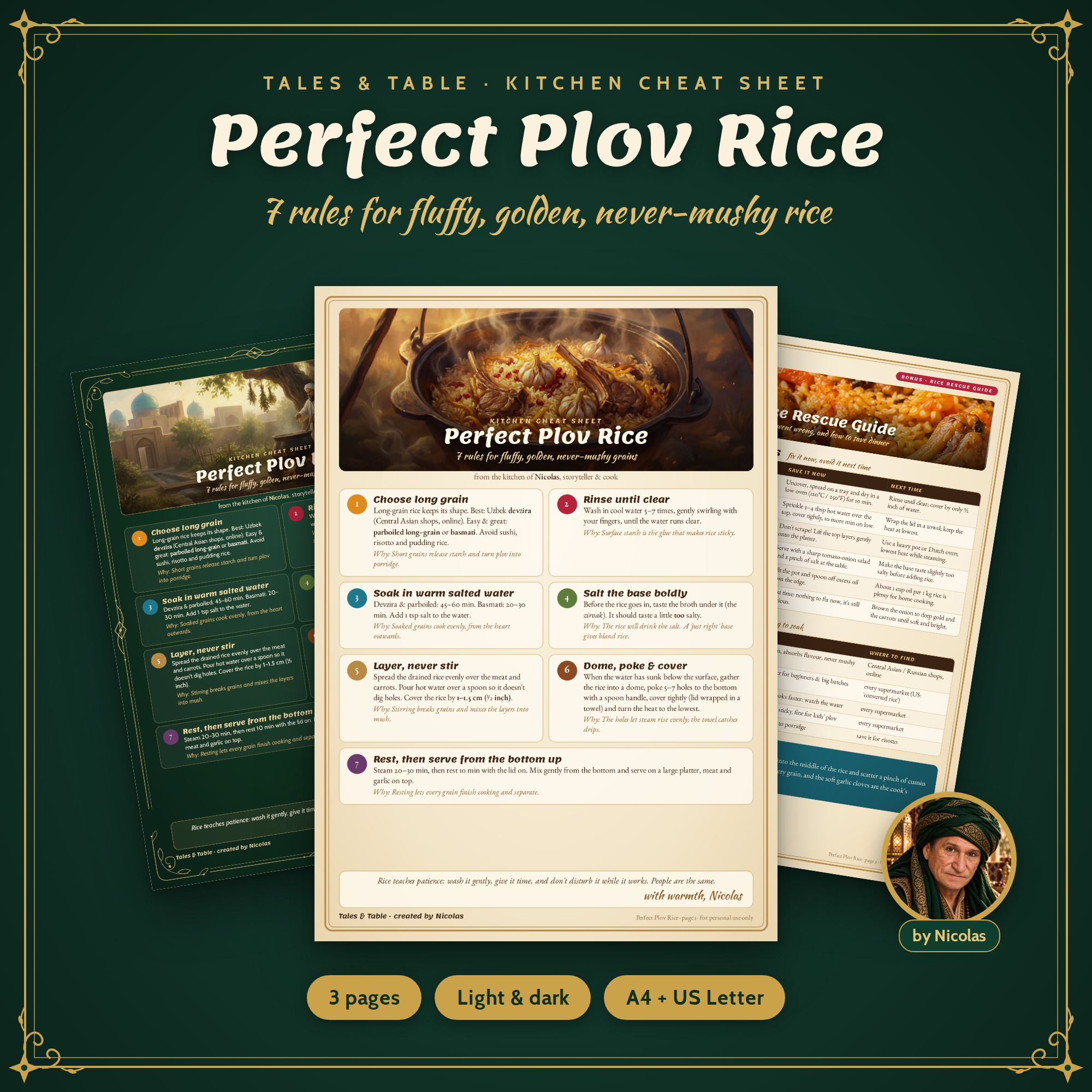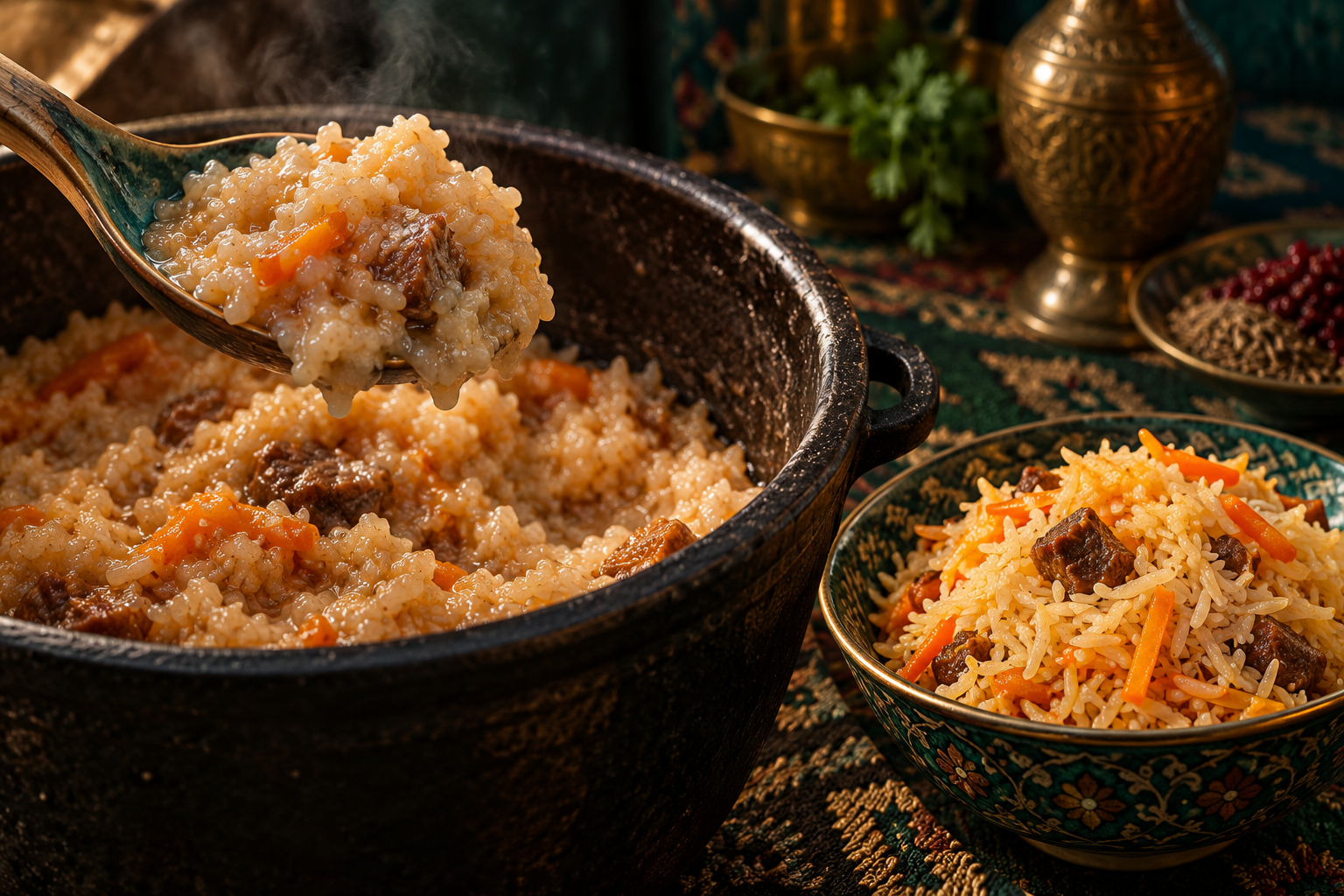
Mushy rice is frustrating, but it can teach you something. Start by recording what happened before trying to fix the problem with more stirring, more heat or a handful of dry rice.
Diagnose mushy plov rice after cooking
Write down the grain, preparation steps, liquid additions and cooking time. Check whether you used the rice named in the recipe. Include extra ingredients, especially changes to vegetables, stock or the amount of base liquid.
Think about handling too. Repeatedly moving softened rice can break grains and make the texture seem more uniform. Follow the selected recipe’s approach to layering and finishing rather than stirring whenever you feel uncertain.
Know what cannot be undone
A grain that has lost its structure will not become a firm separate grain again. If the food was cooked and handled safely, choose a way to serve the result that accepts its softer texture. Do not promise yourself a dramatic rescue that only makes it worse.
Do not mix raw rice into a finished meat dish as an improvised correction. You would create a new cooking problem with ingredients at very different stages of readiness.
Choose one adjustment
For the next attempt, return to the original recipe and pick a single correction: the correct rice, a measured liquid addition or a more controlled finish. Keep everything else stable. That gives you a useful answer instead of another unexplained outcome.
Continue reading: Best rice for plov: choose by method, not a single label.
Frequently asked questions
Can completely overcooked rice become separate again?
Not reliably. Improve the next batch rather than promise a reversal of lost texture.
Should I add raw rice to absorb excess moisture?
Do not use that as an improvised fix for a finished mixed dish.
Why is my plov rice mushy?
Review the grain, preparation, measured liquid and cooking time. Include substitutions and extra moisture in the base. Choose one plausible cause to investigate on the next batch rather than changing every part of the method at once.
How can I fix sticky pilaf rice?
First decide whether the texture can still be improved without worsening the dish. Grains that have lost structure cannot reliably become firm again. If the food was handled safely, accept a softer serving and use the record to improve the next attempt.
Should I stir plov while the rice cooks?
Use the stirring or layering instructions in your recipe. Moving softened grains repeatedly can change their texture. Do not improvise constant stirring simply because the covered stage makes the progress less visible.
Can I add uncooked rice to a wet finished plov?
Do not use raw rice as a casual rescue for a finished mixed dish. Its readiness will differ from the cooked ingredients. A planned method and a measured correction on a future batch are more dependable.
Sources & editorial notes
Original Tales & Table editorial guidance. Linked sources support the cultural, rice or safety points identified in the text. Recipe ideas are original kitchen drafts and have not been tested by our kitchen.