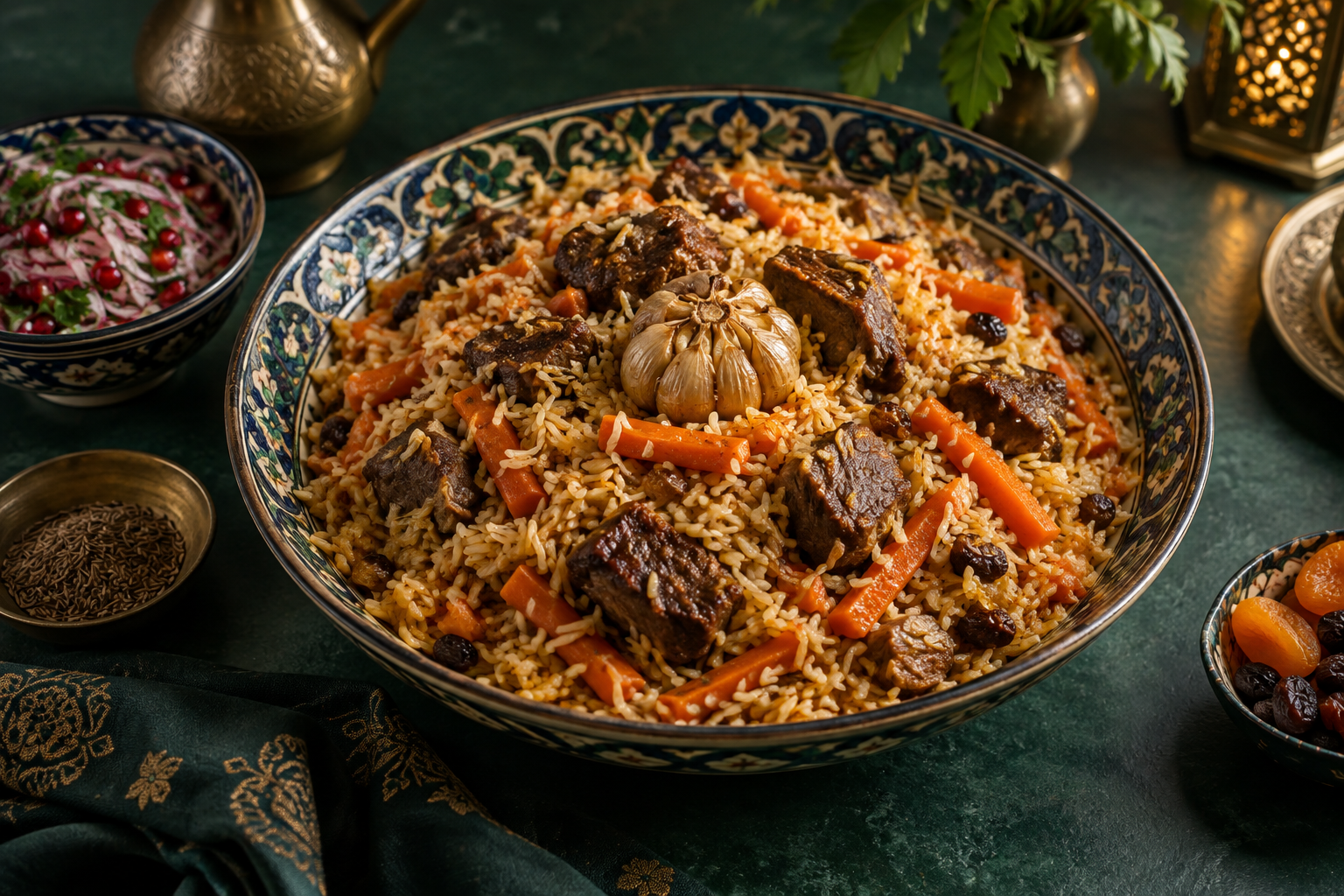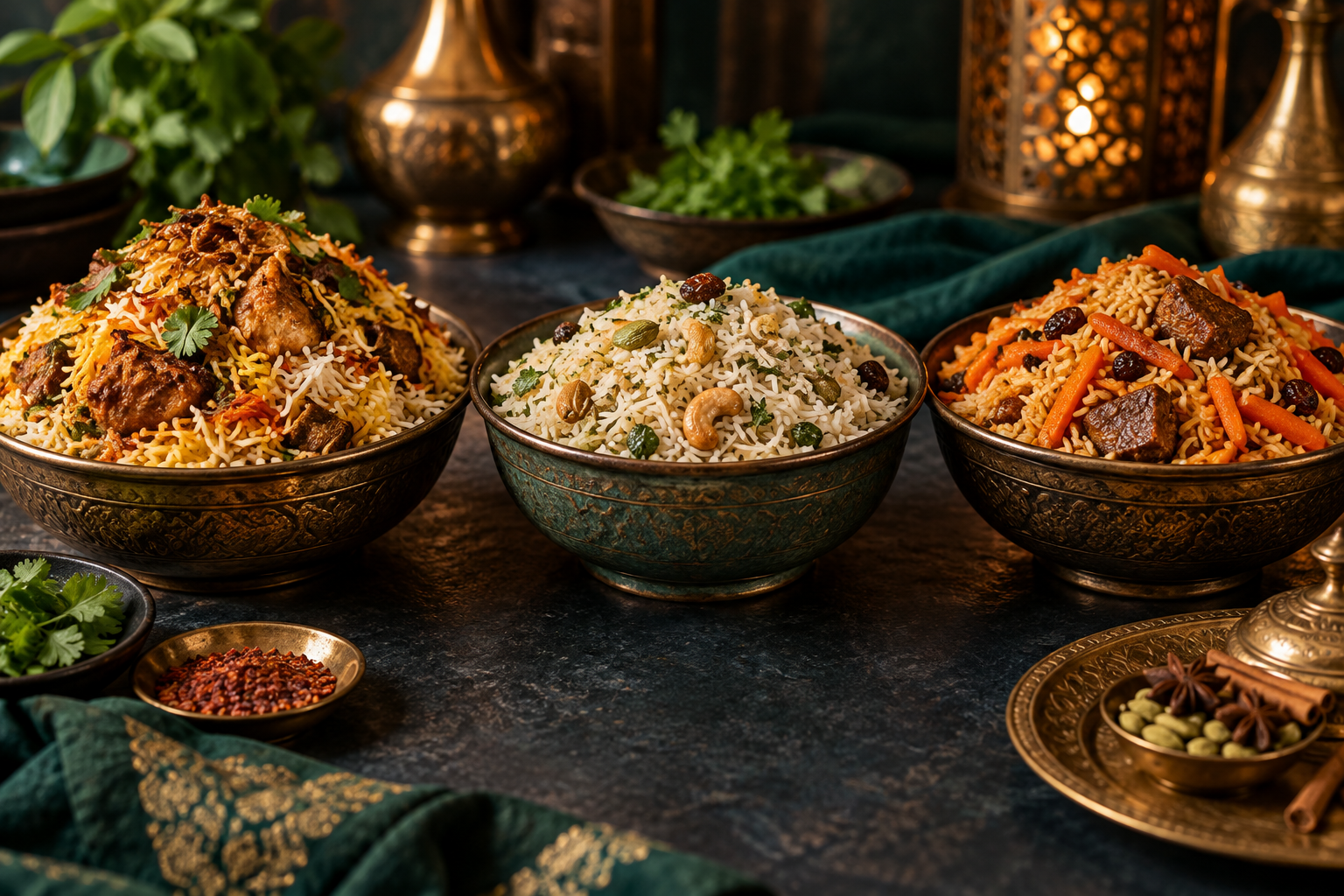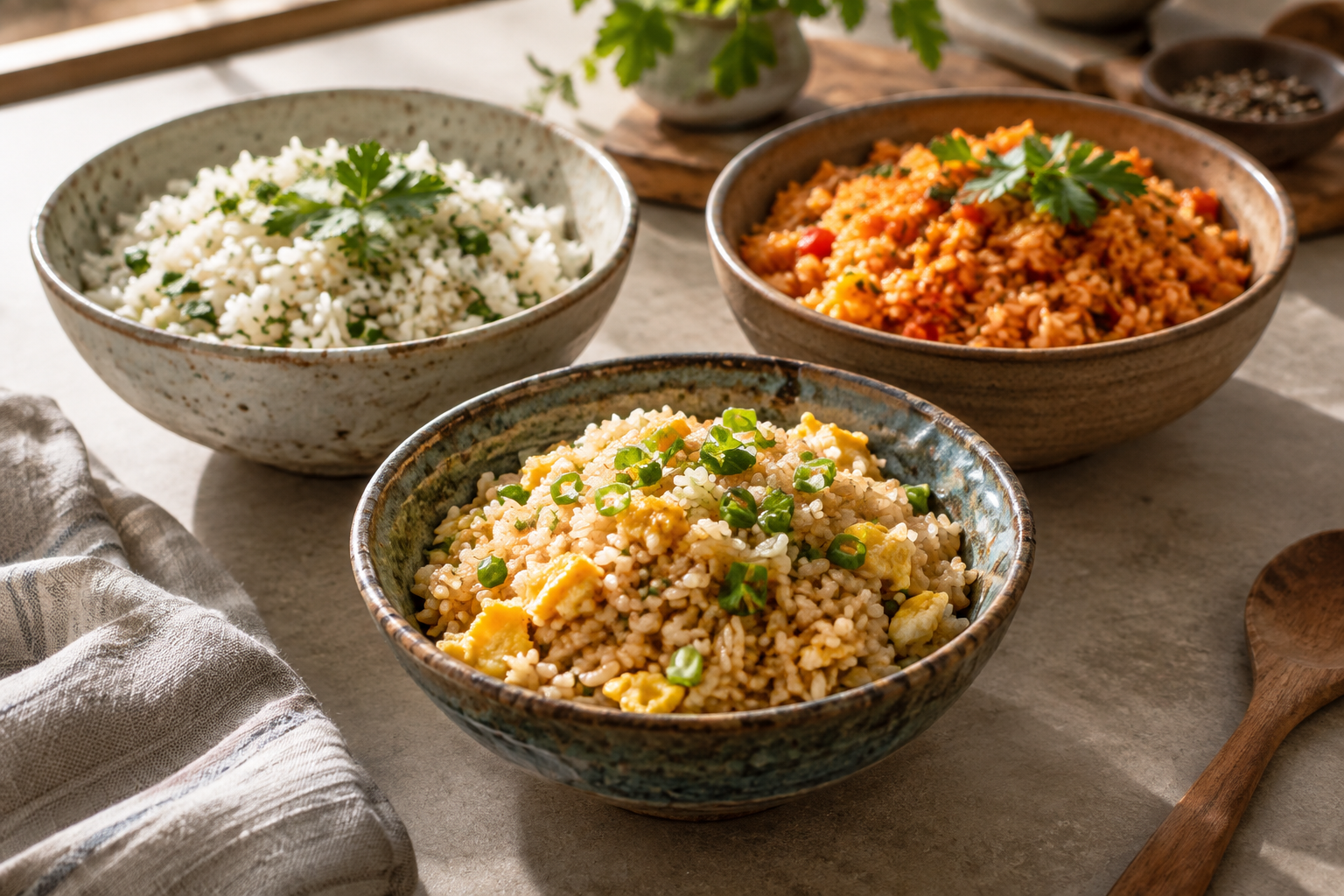
Related-sounding rice names invite comparison. They do not establish that every dish has the same method or one provable starting point.
Plov, pilaf, pulao and polow in context
Encyclopaedia Iranica discusses Persian polow and čelow as distinct rice preparations and traces historical cookbook evidence. UNESCO separately documents Uzbek palov as a living social practice. Those sources describe different scopes: written culinary history and community heritage.
A transliterated word may change spelling across languages. Keep the spelling used by the cook or source you quote, then explain your English search term.
Compare the cooking tasks
Take one complete recipe for each dish. Mark how the rice is prepared, when other ingredients enter, whether components cook together and what is served alongside. That comparison is more useful in the kitchen than a claim that all similarly named dishes are interchangeable.
Do not infer a straight line of descent from spelling alone. Trade, migration and language change are complex; a specific origin claim needs specific evidence.
Create a useful reading list
Save the title, author and date of each recipe. Then write a one-sentence method summary, not a universal definition. Our recipe-reading comparison offers a second way to organise the differences.
Frequently asked questions
Are the four words exact synonyms?
No. Their use depends on language, place and recipe.
Does similar spelling prove one origin?
No. A historical origin needs evidence beyond a shared-looking word.
What should I compare first?
Compare the grain preparation and cooking sequence in named recipes.
Is polow documented historically?
Yes. Encyclopaedia Iranica discusses Persian polow in historical culinary sources.
Sources & editorial notes
Historical and cultural statements are attributed to the linked sources. The image is an AI-generated editorial interpretation, not a documentary photograph. Practical suggestions are original editorial guidance; any cooking examples are untested drafts.