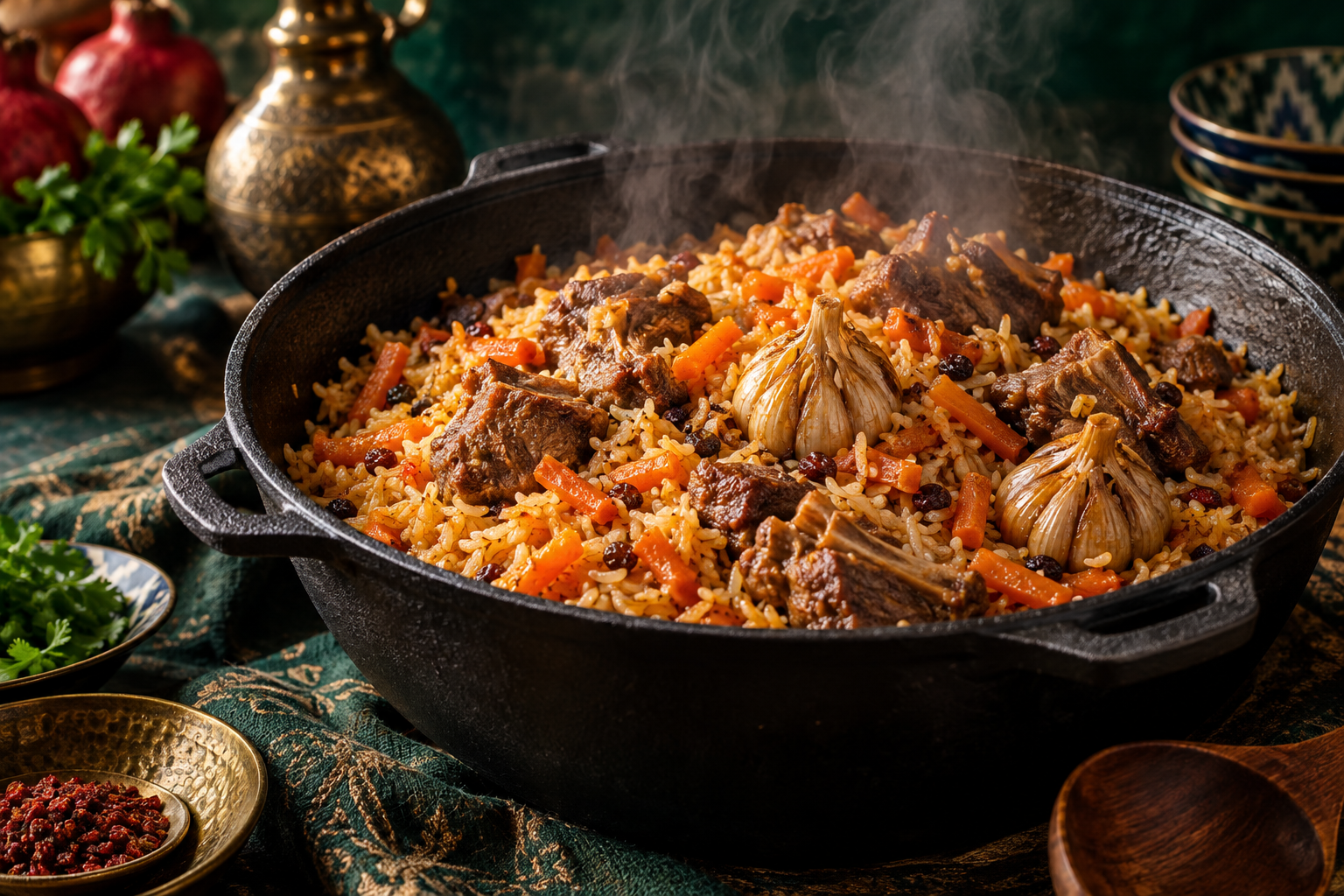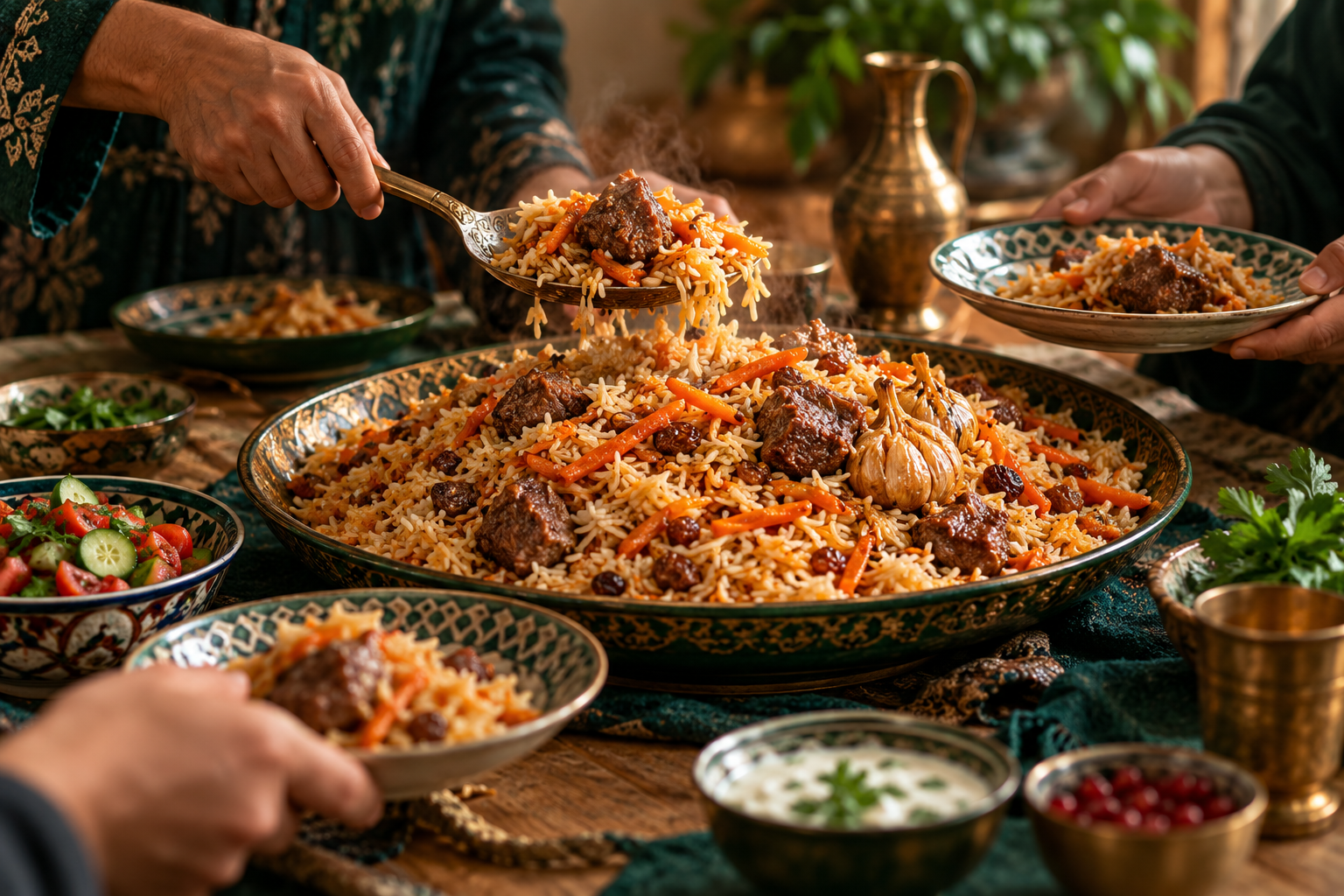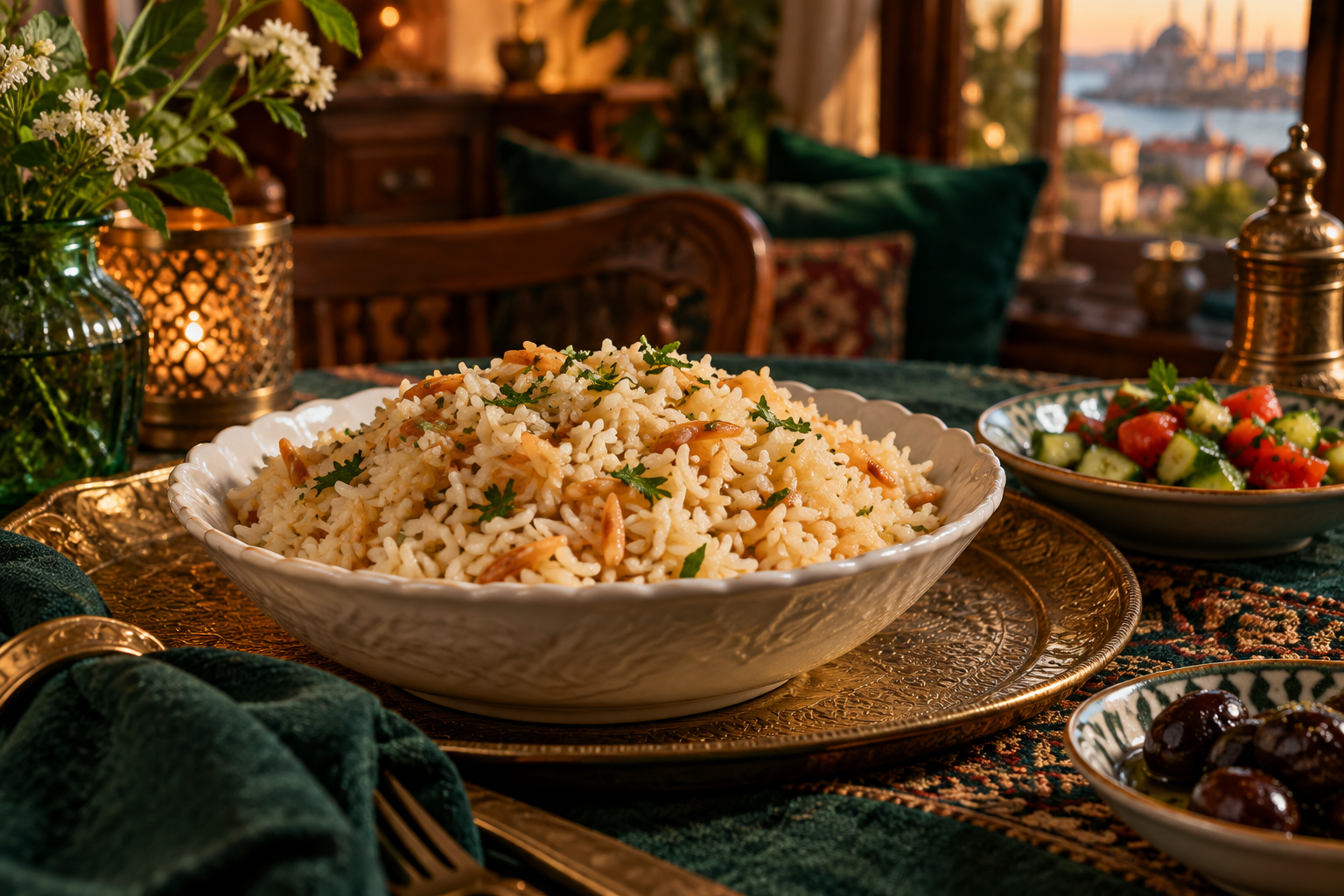
Similar names can hide important differences. To compare pilav and plov well, put specific recipes on the table and look at what the cook actually does.
Compare Turkish pilav with named plov recipes
GoTürkiye’s Bolu food guide includes Mengen pilavı among the region’s dishes. A regional name is more informative than treating all Turkish rice as one recipe. Start by identifying the place and the cook whose version you want to understand.
For your comparison, choose one Turkish recipe and one Central Asian recipe with detailed instructions. Write down whether each is a side dish or a complete meal, whether ingredients cook together and when the grain enters the pot.
Pay attention to the grain
Check the exact grain named in each recipe, not just the word rice. Do not assume that the liquid quantity for one product will suit another. If a recipe includes another grain or pasta, include that in your comparison too.
A useful tasting exercise is to cook modest amounts on different days using the original instructions. Compare texture, seasoning and serving partners. You will learn more from a clear record than from declaring one dish the better version.
Choose a serving role
A rice accompaniment and a rice-based main course make different demands on the rest of the meal. Plan the protein, vegetables and sauce around the role the recipe expects. Name your adaptation carefully if you change that role.
Continue reading: Uzbek plov: ingredients, cooking stages and hospitality.
Frequently asked questions
Are pilav and plov interchangeable recipe instructions?
No. Similar terminology does not replace a recipe’s specific grain, liquid and cooking sequence.
Can I compare two dishes using one pot?
Yes, on separate occasions; follow each recipe rather than combining their instructions.
What is Turkish pilav?
Use the name as the beginning of research into a particular local recipe. The grain, serving role and method in that recipe matter more than a universal description. The GoTürkiye source below provides a regional starting point.
Is Turkish pilav the same as Uzbek plov?
Do not treat their instructions as interchangeable. Compare named recipes, whether they function as an accompaniment or main dish, and the order in which the ingredients cook. Related names can cover different kitchen decisions.
Which rice should I use for Turkish pilav?
Use the product named in the selected recipe or an explicitly planned substitute. Keep its preparation and liquid instructions together. Do not borrow a rice quantity from an unrelated plov recipe without adapting the full method.
How can I compare pilav and plov at home?
Cook small examples on separate occasions and keep the equipment record. Compare finished texture, seasoning and serving role. It is a learning exercise, so record preferences separately from preparation errors instead of ranking entire cuisines.
Sources & editorial notes
Original Tales & Table editorial guidance. Linked sources support the cultural, rice or safety points identified in the text. Recipe ideas are original kitchen drafts and have not been tested by our kitchen.